

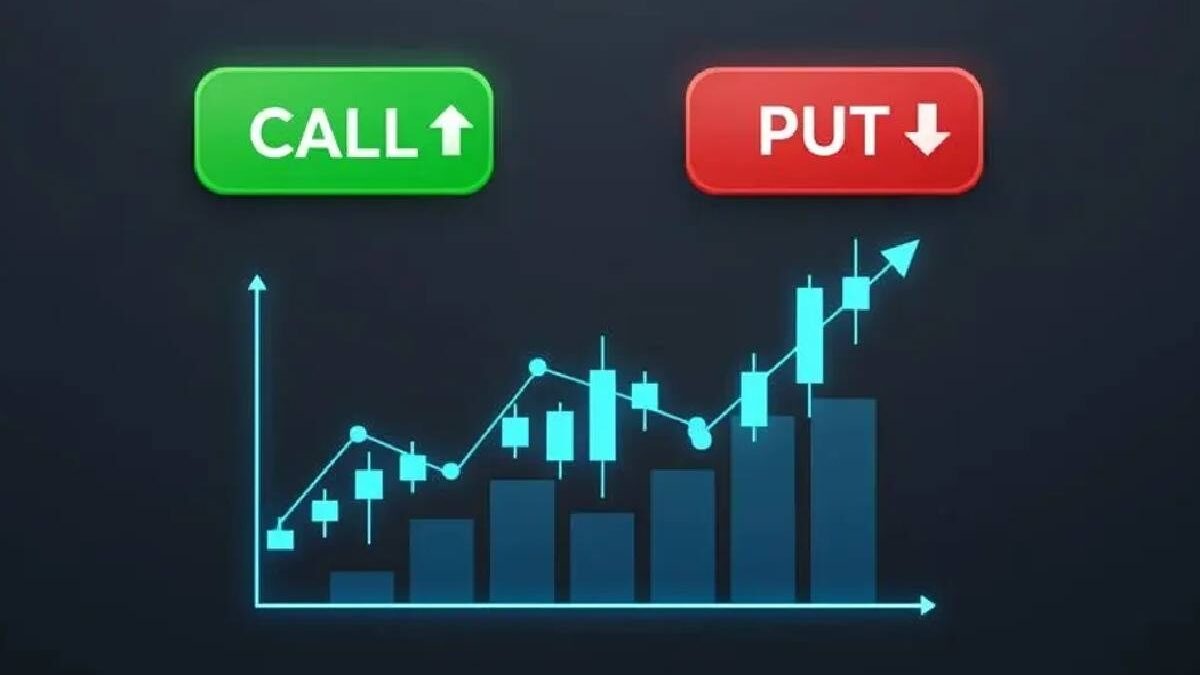
Options trading is a versatile segment of the financial markets that allows investors to take positions on the future movement of an asset without necessarily owning it.
While it can seem complex at first, understanding the foundational concepts of calls and puts can make options a powerful tool for both risk management and speculative strategies. Grasping these concepts is essential for anyone looking to explore option trading effectively.
Table of Contents
Understanding Options Basics
An option is a financial contract that gives the buyer the right, but not the obligation, to buy or sell an underlying asset at a predetermined price within a specific timeframe. The underlying asset can be a stock, an index, a commodity, or even a currency pair. There are two primary types of options: call options and put options. Each serves a different purpose and responds differently to market movements.
A call option grants the holder the right to purchase the underlying asset at the strike price before the option expires. Investors typically buy call options when they anticipate that the price of the underlying asset will rise. By securing the right to buy at a fixed price, the holder stands to profit from upward price movements without having to purchase the asset outright.
Conversely, a put option gives the holder the right to sell the underlying asset at the strike price before expiration. Investors purchase put options when they expect the asset’s price to decline. This allows them to hedge against potential losses in their portfolio or profit from falling prices. Understanding when to use calls and puts is a cornerstone of successful options strategies.
Key Components of Call and Put Options
Every option contract has several critical components that affect its value and risk profile. The strike price is the price at which the underlying asset can be bought or sold. The expiration date is the final day on which the option can be exercised. Finally, the premium is the price paid to acquire the option, which reflects both intrinsic value and time value.
For call options, the intrinsic value exists when the underlying asset’s market price exceeds the strike price. For put options, intrinsic value arises when the asset’s market price is below the strike price. The remaining portion of the premium is the time value, which considers the likelihood that the option will gain intrinsic value before expiration.
Practical Uses of Calls and Puts
Calls and puts can be employed for various purposes, ranging from speculative investments to hedging against potential losses. A speculative investor might buy call options on a stock they believe will experience significant upward movement, amplifying potential gains while limiting the initial capital outlay. Similarly, buying put options on a stock they expect to decline allows them to profit from a downward trend without short-selling the stock directly.
Options are also commonly used for hedging. For example, an investor holding a stock portfolio might purchase put options to protect against short-term declines. If the market falls, the gains from the put options can offset losses in the underlying holdings, providing a form of insurance. This risk management aspect is one of the most practical uses of options for both individual and institutional investors.
Strategies Combining Calls and Puts
While buying calls or puts individually can be effective, many traders combine these options to create more sophisticated strategies. A straddle involves buying a call and a put with the same strike price and expiration date, allowing the investor to profit from large price movements in either direction. A spread strategy, on the other hand, might involve buying and selling calls or puts simultaneously to limit risk while seeking moderate returns.
Understanding these strategies requires knowledge of option pricing, volatility, and the time decay of premiums. Investors also need to monitor the market closely to adjust positions as conditions change. Engaging with educational resources on option trading can provide essential guidance on structuring these strategies and recognising the scenarios in which they are most effective.
Risk Considerations in Options Trading
Despite their versatility, options carry inherent risks that investors must consider. Unlike stocks, options have a finite lifespan, meaning the value can erode to zero if the market does not move as anticipated. This is particularly relevant for buyers, as the premium paid represents a sunk cost. Sellers, meanwhile, may face substantial obligations if the market moves against them.
Volatility also plays a significant role in options pricing. Higher volatility generally increases option premiums due to the greater probability of significant price movements. Time decay, or theta, gradually diminishes an option’s value as the expiration date approaches, particularly for out-of-the-money options. Investors must carefully weigh these factors when planning trades to ensure risk is managed appropriately.
Conclusion
Calls and puts form the foundation of options trading, offering investors flexibility for speculation, hedging, and strategic portfolio management. Understanding how these instruments work, the factors influencing their pricing, and the strategies that combine them is essential for anyone looking to navigate the options market confidently.
By approaching trading with education and discipline, investors can harness the power of options while mitigating potential risks, ultimately enhancing their ability to achieve financial objectives. Learning the intricacies of calls and puts is a journey that rewards patience and diligence.